 JLV College Counseling
Spring 2015 college visit opportunities in Calif.
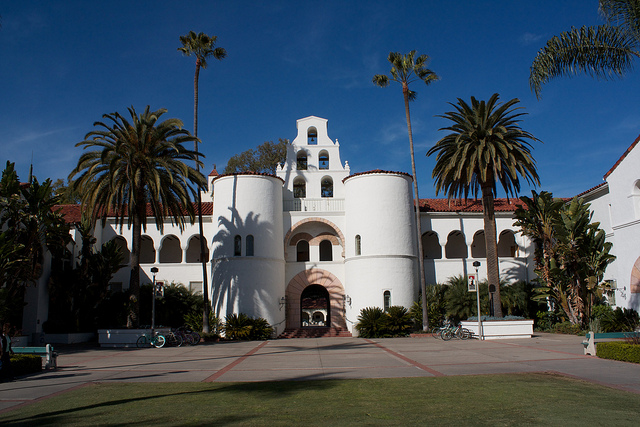
San Diego State University by Jay Galvin licensed under CC BY 2.0
San Diego State University is just one of the many institutions offering campus visit opportunities this spring.
The spring is a popular time for college visits. In addition to many college bound students visiting colleges during their spring breaks, many institutions offer open house or preview days for prospective students. California has many colleges and quite a few of them are offering large open house events this spring. If students are interested in learning more about a college, a campus visit is the best way to find out if the college feels right for them.
Below is a list of the spring open houses at colleges and universities in California. To learn specific information about the events, such as hours and the schedule of the day, visit the link. If interested, students should register to attend early, as space can be limited at some of the event.
Azusa Pacific University (Azusa, California)
APU Preview – Feb. 5-6, 2015; Mar. 26-27, 2015
Transfer Night – Feb. 11, 2015; Mar. 4, 2015; Apr. 1, 2015; May 13, 2015
Biola University (La Mirada, California)
Biola Bound – Feb. 7-10, 2015; Mar. 7-10, 2015; Apr. 18-21, 2015
Spring Preview Day – Feb. 15-16, 2015
California Baptist University (Riverside, California)
Transfer Day – Feb. 16, 2015
Spring Preview Event for High School Students – Mar. 6, 2015; Mar. 27, 2015
Concordia University-Irvine
Seniors’ Preview Day – Feb. 5-6, 2015
Fine Arts Preview Day – Feb. 21, 2015
Spring Open House – Apr. 18, 2015
Fresno Pacific University
The Encounter – Feb. 24-25, 2015
Saturday Snapshot – Mar. 7, 2015
Holy Names University (Oakland, California)
Discover HNU – Feb. 7, 2015
The Master’s College (Santa Clarita, California)
Mondays @ Master’s – Feb. 16, 2015; Apr. 13, 2015
College View Weekend – Mar. 19-21, 2015
Stampede – Feb. 7, 2015
Menlo College (Atherton, California)
Spring Open House – Mar. 28, 2015
Mills College (Oakland, California)
Transfers Experience Mills – Jan. 30, 2015
Spring Visit Day – Mar. 21, 2015
Pacific Union College (Angwin, California)
College Days – Feb. 12-15, 2015; Apr. 9-12, 2015
Point Loma Nazarene University (San Diego, California)
Transfer Student Preview Day – Jan. 30, 2015
Get to the Point Preview – Mar. 20, 2015
Sunset Tours – Feb. 19, 2015; Mar. 26, 2015; Apr. 23, 2015
San Diego State University
Explore SDSU – Mar. 14, 2015
Simpson University (Redding, California)
Spring Preview Weekend – Mar. 13-14, 2015
University of California, Berkeley
Cal Day – Apr. 18, 2015
University of California, Davis
Picnic Day – Apr. 18, 2015
University of California, Riverside
Highlander Day – Apr. 18, 2015
University of California, Santa Barbara
Spring Insight 2015 – Apr. 11, 2015
University of the Pacific (Stockton, California)
Profile Day – Apr. 11, 2015
Vanguard University (Costa Mesa, California)
Hello VU – Jan. 30, 2015; Feb. 20, 2015; Mar. 13, 2015
Morning VU – Feb. 14, 2015; Mar. 7, 2015; Apr. 11, 2015
Transfer 2 VU – Feb. 18, 2015; Mar. 18, 2015; Apr. 15, 2015
Westmont College (Santa Barbara, California)
M.O.V.E. (Multiculture Overnight Visit Experience) – Apr. 17-18, 2015
William Jessup University (Rocklin, California)
Spring 2015 Preview Day – Feb. 6, 2015
Spring 2015 Transfer Day – Apr. 17, 2015
Although not all California colleges offer preview day events for prospective students in the spring, students are still encouraged to visit. If students are interested in colleges that are not listed above, or cannot make the open house events, students should contact the colleges to set up an individual college visit.
Want to stay in the loop? Follow my blog to be notified when new articles are published. You can also follow me on Twitter, Facebook or Pinterest for information on college admissions.
Who is my parent for FAFSA purposes?

Need help figuring out who your parent is for FAFSA purposes? Here is the breakdown.
Via Federal Student Aid
All students who are considered dependent must have their parent or legal guardian provide information on the Free Application for Federal Student Aid (FAFSA). However, some students might have trouble figuring out who should fill out the FAFSA. For example, if parents are divorced or living apart, it may be confusing for the student to determine what parent’s information should be included. Here are some helpful hints to figure out what parent should fill out the FAFSA.
Before going over the circumstances, students must understand who is considered a parent. Parent or parents are defined by the FAFSA as the student’s legal (biological or adoptive) parents or stepparents, or a person who has been determined as the legal parent. Widowed stepparents, grandparents, foster parents, legal guardians, older siblings, and other family members are not considered parents for FAFSA purposes unless they have legally adopted the student.
- Parents are married. If the student’s parents are married and living together, financial information for both parents should be included on the FAFSA.
- Parents are unmarried, but living together. Just like married parents, if parents are living together, financial information for both parents should be included on the FAFSA.
- Parents are married and living apart. If parents are living apart and not considered legally separated by the state, information for both parents should be included on the FAFSA.
- Parents are unmarried, separated or divorced and living apart. The parent the student lived with the most should be the one who fills out the FAFSA. If that parent is remarried, the financial information for the new spouse should also be included on the FAFSA.
- Student lives equally with unmarried, separated or divorced parents. If the student lived with each parent equally during the year, the parent who provided the most financial support should fill out the FAFSA. Again, if that parent is remarried, the financial information for the new spouse should also be included on the FAFSA.
- Student does not live with legal parents. If the student lives with someone other than their legal parent, they must still provide information for their legal parents.
- Student cannot get financial information for parent. There are some circumstances in which students might not be able to get financial information for their parents. These special circumstances could be that parents are incarcerated, the student left the home due to an abusive family environment, or the student does not know where their parents are and are unable to contact them. If students have any of these circumstances, students can fill out the FAFSA and specify they cannot get parental financial information due to special circumstances. Students will be able to submit the FAFSA without their parent’s information, but must contact the financial aid offices at the colleges they are considering to discuss the special circumstances. The financial aid office will ask for more information and then will make the final decision about the student’s dependency status.
- Parents will not provide information on the FAFSA. If the student is considered dependent per the FAFSA’s definition, but parents will not provide financial information, there are some options for the student. Student will need to specify that they cannot get financial information for their parent and that they do not have special circumstances (as described above). Unfortunately, the student will not be able to get federal financial aid other than an unsubsidized loan. Student will then need to contact the financial aid offices at the colleges they are considering to discuss the student’s circumstances. If students use this option, an Expected Family Contribution (EFC) will not be calculated. Keep in mind that many state aid programs, as well as institution specific aid requires an EFC. Therefore, students will probably be ineligible for these aid programs.
If students still have questions about who’s information should be included on the FAFSA, they should visit the Federal Student Aid website for more information.
Want to stay in the loop? Follow my blog to be notified when new articles are published. You can also follow me on Twitter, Facebook or Pinterest for information on college admissions.
Buy Me a Coffee

Book Pick of the Month

The link for the book is an affiliate link. You will not pay extra; however, I do receive a small reimbursement if you purchase through the links. Thank you for your support of JLV College Counseling.


 JLV College Counseling