 JLV College Counseling
Campus Visit: San Jose State University

Tower Hall
Overview
On May 2, 2014, I visited the San Jose State University (SJSU) campus in San Jose, California. SJSU was founded in 1857 as the Minn’s Normal School in San Francisco and moved to the current location in 1870. San Jose State University is the oldest public university on the West Coast. It is part of the California State University system.
San Jose State University currently has over 30,000 students. Approximately 25,000 of the students are pursuing undergraduate degrees. The average class size for lower division courses is 35 and 26 for upper division courses. SJSU is the largest university in the Silicon Valley.
The SJSU campus is located in downtown San Jose. The campus is 154 acres and covers 19 city blocks. The campus has 23 academic buildings and seven residence halls. SJSU’s one library is jointly shared with the city of San Jose. The Martin Luther King, Jr. library is the first in the country to be funded, managed and operated by a city and a major university. The campus is located less than five miles from the San Jose International Airport and approximately one hour from San Francisco.
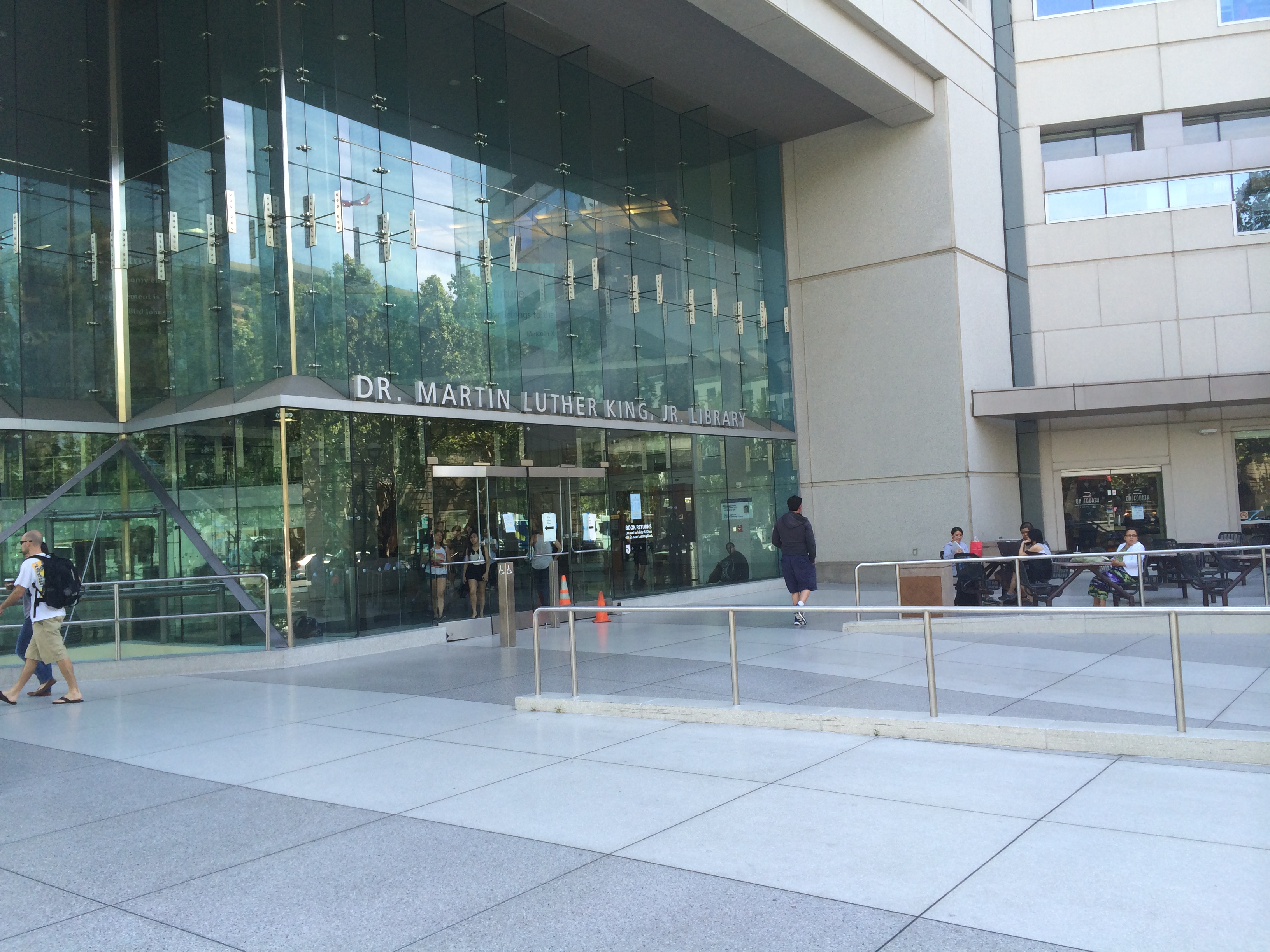
Martin Luther King, Jr. Library
Academics
San Jose State University offers 69 bachelor’s degrees with 81 concentrations. Most students will be able to find a major that they will enjoy studying at SJSU.
- Most popular majors include Business, Engineering, Visual and Performing Arts, Nursing, Education, Psychology, Kinesiology, Journalism and Computer Science.
- Programs that are unique at San Jose State include Aviation Science, Transportation Management, Meteorology and Sustainable and Green Manufacturing Technology.
- Silicon Valley firms employ more graduates of SJSU than from any other university in the country.
- Forbes has ranked SJSU as one of the top 20 “Colleges that will make you rich.”
- The Davidson College of Engineering ranked as Silicon Valley industry’s first choice for new engineering hires by the Silicon Valley Business Journal (2012).
- SJSU is the number one supplier of education, engineering, computer science and business graduates to Silicon Valley.
- SJSU is a national leader in graduating minority students.
- 90% of SJSU students taking the NCLEX (National Council Licensure Examination for Nursing) exam passed the test on the first attempt.
- Ranked among the top 200 university in the nation for total research spending (National Science Foundation).
- A research partner with NASA Ames Research Center.
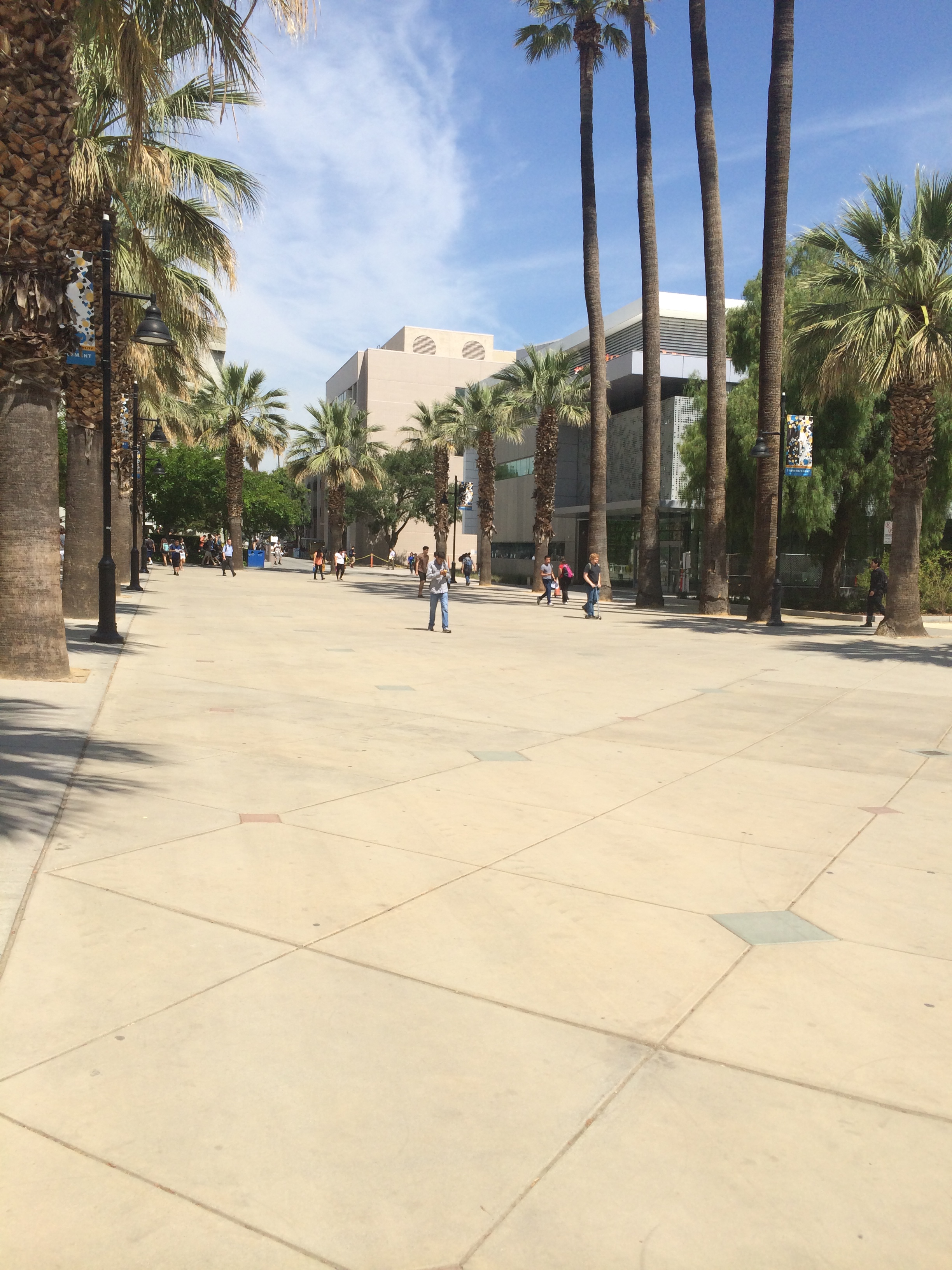
San Jose State University Campus
Student Activities
With over 30,000 students, the SJSU campus always has something going on. Unlike many large state universities where students go home on the weekends, the SJSU campus is usually bursting with activities.
- Nearly 400 recognized student organizations
- 43 fraternity and sororities
- Numerous leadership opportunities and leadership development programs
- The SJSU Spartans compete in the Mountain West Conference (MWC) at the NCAA Division I Level. Spartans compete in men’s baseball, basketball, cross country, football, golf and soccer. Women Spartans compete in basketball, cross grounty, golf, gymnastics, soccer, softball, tennis, volleyball, water polo, track & field and swimming & diving.

Olympics Statue
Admissions
Students apply to San Jose State University using the CSUMentor, the application for all universities in the California State University system. The application fee is $55, or students can obtain an application fee waiver (available on the CSUMentor website). The application for all CSUs opens on October 1 and must be submitted by November 30. Students must complete the A-G requirements with a C- or better in high school, submit SAT or ACT test scores and meet the minimum eligibility index (combination of GPA and official SAT/ACT scores).
SJSU is a somewhat selective college and admitted 65% of the applicants that applied for Fall 2013.
SJSU is a state university, so the cost of attendance is on the low side. Tuition for the 2014-2015 academic year is $7,484 (and an additional $372 per unit for out-of-state students). Housing is $13,350 for the academic year. SJSU students are eligible all federal and state grants and loans. In addition, SJSU offers many scholarships.

SJSU Campus
Who Would Fit?
As I walked around campus and explored the classrooms and buildings, it is clear that SJSU could be a good fit for both students that are shy and those that want to be very involved. Shy students can be a face in the crowd because of the number of students in classes and involved in activities. But, students that want to make a name for them can do so as well because of the active student life population. The majority of students that attend SJSU are from California, but the number of out of state students is slowly growing.

Campus Tour
Interested in SJSU? Find out more!
SJSU offers campus visits daily. You can also sign up to receive more information and be notified of important information.

More pictures of SJSU campus here
Successful Summer College Visits

The best time to visit colleges is when they are bursting with excitement during the academic year. Visiting during the school year will allow students the opportunity to live the life of a college student at the school and see if it feels right for them. But, visiting during the academic year is not always an option. Summer is the perfect time for family vacations. Students won’t have to miss school and the weather will be nice. There are advantages and disadvantages of visiting during the summer. In spite of the disadvantages, my tips will help make summer college visits a success.
The Bright Side of Summer College Visits
- Prospective students won’t miss school. Doing well in high school is very important to getting into college. So, students won’t have to jeopardize their grades by missing school.
- Visits can coincide with family vacation. Families will already be in the area, so why not visit some college campuses too?
- The whole family can visit. Sometimes one or both parents cannot visit when students visit during the academic year. Summer visits, if coinciding with family vacations, will allow parents to visit. Plus, siblings can visit too, giving them an opportunity to start thinking about college.
- The weather will be great. For most parts of the country, the weather will be nice. Visitors probably won’t have to deal with a lot of rain or snow like you might experience during the academic year.
- There will be plenty of parking. College campuses are notorious for not having enough parking. With students gone for the summer, there won’t have a problem finding a place for your car.
- Smaller campus tour groups. Campus tours during the academic year can be quite big and impersonal, especially at more popular colleges. Summer campus tours are usually smaller, allowing you the opportunity to connect with admissions representatives and campus tour guides.
Disadvantages of Summer College Visits
- Not many students on campus. Colleges will feel very different with and without students. There will be fewer opportunities to talk to current students during the summer.
- No campus activities. If specific extracurricular activities are important, you probably won’t be able to experience them during the summer. There won’t be any sporting events, theatrical productions or club meetings to attend.
- Can’t sit in on classes. Academics are the most important thing about attending college. During the summer, you probably won’t be able to experience a real class at the college.
- The weather will be great. The reason this can be a disadvantage is because you won’t be able to see what the weather is really like during the year.
- You cannot spend the night. One of the ways to truly experience life as a student is to spend the night in the residence halls. However, during the summer, residence halls are usually closed to visitors.
Summer Visits Can Be Successful
- High schools and colleges are usually on different schedules. While many high schools start in September, some colleges start in August. So, while you have a few more weeks of summer, colleges might already be in session. This could be the perfect time to visit.
- Schedule college visits well in advance and be flexible with dates. Summer is the time for staff vacations at college. Check in with the offices to make sure they will be open when you want to visit.
- Attend summer visit events. These events will try to bring together a lot of the things that prospective students want to see or do when they are on campus, including talking to faculty members, sitting in on classes, campus tours, and talking to current students. These events can fill up quickly, so it is best to sign up early.
- Contact the Admissions Office and let them know want you want in your visit. If you, for example, want to sit in on a History class, talk to a professor, meet a current student and talk the baseball coach, let them know. You may have to be flexible with your dates, but if you give them notice, they might be able to give you everything you want.
- Get discounts! Yes, continue talking to the Admissions Office and see if they have discounts for things such as hotels, restaurants in the area, etc. A lot of time, they will have these discounts, but they are not publicized on their websites.
- Talk to the students you do see. There won’t be many students on campus, but there will be some. Talk to them and ask your questions. The person giving you the campus tour will probably be a current student. But, you’ll probably find more in the library, in other offices, or walking around campus.
- Visit the surrounding community. No matter what, you won’t be spending all of your time on campus. You’ll eventually need to get off campus to shop or have some fun. Find out about the local eateries and hangouts and check them out.
- Visit only a few college campuses per day. If you try to jam a lot of college visits into one day, it will be hard to really experience them. Plus, after a few visits, things will start blending together.
Lastly, I want to emphasis that it is important to work with the Admissions Office when visiting college campuses. Let them know what is important to you and they will do their best to meet all your needs.
Scholarship Saturday – May 3, 2014

The deadlines for the scholarships that were on this list have passed. To see scholarships that are still accepting applications, visit more recent Scholarship Saturday posts.
Summer Before College Checklist
It is May 1st – National College Enrollment Deposit Day! You made it! I hope that you’ve sent in your deposit by now to save your spot for the fall. And, if you’ve mail the deposit, it doesn’t hurt to check in with the school to make sure they received it!
I know that the past few months have been stressful. You’ve been pouring over your college acceptance letters and financial aid award letters. You’ve done a lot of thinking over the last few months! You can finally breath a sigh of relief because you know where you’ll be going to college in the fall.
Although the hard part of choosing the college is done, there are quite a few things you’ll need to make sure you do this summer. But relax – the list below is easy compared to making your final decision on what college you’ll be attending.
- • Let the other colleges know you won’t be attending. Let them know so that they can close out your application. Plus, letting them know could open up a spot for a student on the wait list, or ensure you won’t have an awkward phone call from the Admission Counselor.
- Submit your Housing Application/Questionnaire and deposit. Make sure these things are in by the deadline to ensure you’ll have a place to stay in the fall. Plus, if you get the application and deposit in by the deadline, you’re more likely to get your first choice of residence hall.
- Update your FAFSA and provide required financial aid documents. If you estimated the figures to get the FAFSA in by the deadline, log back in and provide the correct information. Also, if the college is still requesting documents, turn them in. You made your decision based on your financial aid award letter – you don’t want to lose out on a scholarship because you didn’t turn in a document to the Financial Aid Office requested.
- Make arrangements to have your final high school transcript submitted to the college. Make sure that the transcript is not submitted until final grades are posted.
- Submit your AP and/or IB test scores. You did all of the hard work, make sure the test scores are in so that you can get college credit!
- If you have taken college courses, submit the latest official college transcript to the college.
- Thank everyone that helped you through the college admissions process. People to thank could include your counselor, teachers, letter of recommendation writers, coaches, parents, family members, etc. It was a long process and a lot of people helped out – let them know you appreciate them.
- Sign up for placement tests, if required by college.
- Sign up for academic advising and registration. The sooner you sign up for this, the more likely you’ll get the classes you’re hoping to get in the fall.
- Sign up and attend orientation. New student orientation is a great way to get plugged-in at the college.
- Continue looking for scholarships. It’s never too late to get a scholarship. There are many great resources available including Fastweb, Zinch, CollegeXpress.
The above list looks long, but the tasks are easy. The tasks are also very important to ensure a smooth transition into college.
And lastly, enjoy your summer before heading off to college.
Buy Me a Coffee

Book Pick of the Month

The link for the book is an affiliate link. You will not pay extra; however, I do receive a small reimbursement if you purchase through the links. Thank you for your support of JLV College Counseling.

 JLV College Counseling