 JLV College Counseling
7 Tips For Rising Seniors – #3 – Connect With Colleges

There’s a trend in college admissions called the “stealth applicant.” These are students that never officially show interest in a college until they actually apply for admission. The students might have visited a college fair and grabbed materials from the Admissions Officer. They may have done an unofficial tour of the college. And, they may have visited the college websites numerous times. But, they never “said” to the college, “I’m interested in you.”
There could be many reasons students choose not to share their interest before the application. I’m here to tell you all of the reasons it’s a good idea to let colleges know you’re interested:
- The colleges will send you more information that might not be available on their website or in their publications.
- You’ll be notified about ways to visit campus, including prospective student events. This could even mean being invited to fly-in programs where the college will take care of your travel arrangements.
- Some colleges might waive the application fee for students they “know.”
- You’ll be reminded about important deadlines and information about the application process.
- Admission Counselors are more likely to advocate for you when it’s time to make a decision on your application.
- You’ll be able to connect with people that are associated with the university and ask your questions.
Not all of the above reasons to connect are guaranteed to happen. But, there’s a chance they could happen. Why not put yourself out there and connect with the college? It doesn’t hurt and it’s free.
There are many ways to connect with the institutions. You can do one or all of the suggestions below to connect with a college.
- Sign-up for the mailing list. Most colleges make it very easy to sign up to receive more information about their institution. Just head over to the main university page and find your way to the admissions/prospective students page. Fill out the form for “more information” and you’ll start receiving mail and emails from the college.
- Visit college table at local college fair. Visit the college at a local college fair and do more than grab materials and move onto the next table. Introduce yourself to the representative and ask questions. The person on the other side of the table will have a lot of insight into the admissions process and could possibly be the person that will be making the decision on your application.
- Attend information sessions. If the colleges you are interested in attending visit your high school or area, attend their information session. The presentation will give you general information about the university and admission. An advantage to attending presentations is that you’ll probably also get to hear personal stories about the university that are not always shared in the printed publications and website. Plus, you’ll have the opportunity to connect with an Admissions Officer and ask questions
- Visit campus. Visiting the colleges you are interested in is probably the most important step you can take in deciding if a college is for you or not. Every piece of material you receive from the college will be marketing. The whole purpose of the publications you receive is to make you want to attend the college. You’ll never know for sure if the college is the place for you until you step on campus and see how it feels to you.
- Follow college on social media. Each platform offers something a little different and is worth checking out.
- Facebook, Twitter, Google+ and Pinterest – Colleges will use these platforms to share information about admission, news about the college and general information about college and higher education. By following the main university pages, you can learn about other pages or groups that are more specific to your interest, such as Admissions, a sporting team or an academic major. If you spend time on these pages and observe the people that participate on the page, you can connect with them. These people could be current students, alumni, faculty, staff or even other prospective students.
- YouTube – You’ll find many different types of videos on the college YouTube channels. In addition to marketing videos, you’ll probably also find virtual campus tours, student produced videos and videos of lectures. Viewing videos on the YouTube channel is especially important when you haven’t visited campus because you’ll get a feel for the personality of the college.
- LinkedIn – Connecting to universities on LinkedIn is a new feature. However, it offers something the other social media platforms don’t – reviews are featured on the page and you can connect with the alumni that are posting the reviews. This is a great opportunity to see what students that attended the college have to say about the college, as well as where the alumni are today.
- Get to know your Admission Counselor. At most colleges, the Admission Counselor is a very important person, especially to you. At many colleges, the Admission Counselor that works with students from your geographic area will be the person that makes the decision on your application. Making a good impression, showing your interest in the college and connecting with the Admission Counselor in general can benefit you during the application decision time.
Connecting with colleges is a great way to get as much information about a college a possible. Because college is such a huge investment in time and money, you want to make sure you learn as much as you can. In addition to helping to give you as much information as possible, connecting with the college could potentially help you during the college admission process. Why not check them out and let them know you’re interested?
Join me next time when we discuss summer activities.
Check out the other tips for Rising Seniors:
1. Build and Narrow Down Your College List
Scholarship Saturday – June 14, 2014

The deadlines for the scholarships that were on this list have passed. To see scholarships that are still accepting applications, visit more recent Scholarship Saturday posts.
7 Tips For Rising Seniors – #2 Clean Up Social Media
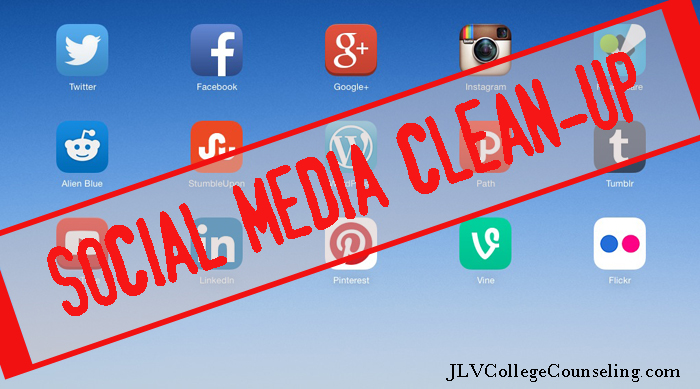
A growing trend in college admissions is that Admissions Officers are viewing the social media accounts of their applicants. According to a Kaplan Test Prep Survey, 31% of Admissions Officers have visited an applicant’s social media profile. As a former Admissions Counselor and Director, I can tell you that I visited quite a few social media accounts. As college admissions become more competitive, it’s likely the number of admissions officers viewing social media profiles will continue to increase.
Why would Admissions Officers view Social Media accounts? Here are just a few reasons:
- Social media accounts can distinguish applicants, especially at competitive colleges
- Identify and recruit talented students
- Alerted by someone about inappropriate behavior on social media
- College has strict community living standards (no drinking, smoking, etc) and view social media to ensure students do not partake in these behaviors
- Colleges want students that fit the college image in regards to how they carry themselves publicly
- Curiosity
While the chance an Admissions Counselor will see your social media presence is slim, there is a chance. Plus, colleges are not the only ones that review social media before making decisions. Scholarship committees and hiring committees are also using social media during their selection processes. One of my favorite articles about the subject was published in The New York Times in 2013, titled “They Loved Your G.P.A. Then They Saw Your Tweets.” Check it out if you’re curious what college admissions officers are saying about social media.
As you start to review your social media accounts, ask yourself, “Do I want _______________ seeing this?” Frequently it is called the “Grandma test,” but maybe there is someone else you want to use as your moral compass. It could be your mom, dad, pastor, future employer, etc. Whoever it is, keep asking yourself that question as you review your profiles and posts. If there is something that doesn’t pass the test, delete the post. This also goes for photos that you have posted, as well as tagged photos.
In addition to reviewing your social media profiles you use regularly, Google yourself and see what comes up. Is there a social media profile you forgot you even had? Did someone tag you in a photo you did not even know was online? It’s always good to Google yourself on a regular basis to see what you find. If you have a common name, search your name along with things like your city, high school, activity, etc.
To be safe, avoid the following topics/photos on social media:
- Drinking
- Smoking
- Drugs
- Sex
- Bad mouthing something/someone
- Cursing
- Violence
“I’ll just delete my social media accounts.”
If you’re thinking about changing your name and/or email address on all of your social media accounts, that’s probably not the best thing to do. If colleges are choosing to look for their applicants on social media, not having a presence will make them ask the question, “What are they trying to hide?” Although not all students are on social media in some way or another, I think we can agree that most students are.
Let Social Media Work In Your Favor
Many of the articles you find about social media and college admissions will talk about how it can hurt your chances. But, did you know social media interactions can help in the process?
Follow the colleges on social media and…
- Like a story or photo they posted? Share, re-tweet or re-pin it. There’s a chance they might notice.
- Did you visit campus or have a good conversation with someone associated with the college? Post about it and don’t forget to tag the college. They are very likely to notice this.
- Ask thoughtful questions on the social media site. The college will notice you because most colleges will respond to questions on social media sites.
Here are just some examples the above worked in favor of students when I was an Admissions Director:
- The Admissions Committee was on the fence about admitting a student, but because of the student’s positive interaction with the college on social media, we took a chance on the student.
- When it came to financial aid time, after the student was admitted, the student let us know that there was not enough financial aid offered. Because of the long term, positive relationship I had with the student on social media, I advocated for the student to get more financial aid.
- An applicant was an amazing ambassador for the college on social media. After his visits to the college, he always posted pictures and talked about the great experience he had. When it was time to start hiring students to work in the Admissions Office, I contacted him directly to invite him to apply. I knew if he posted positively about the college on his own, he would do an amazing job as a campus tour guide once he was a student on campus.
The above examples are from my own experience working in Admissions, but I know there are many other examples like this at other colleges.
Take the time to clean up your social media accounts and start letting social media work in your favor!
Join me next time when I share information about connecting with colleges.
7 Tips for Rising Seniors – #1 Build and Narrow Down Your College List
7 Tips For Rising Seniors – #1 – College List

Congratulations! You have completed your junior year of high school. You are now a senior! You only have one year to go in high school and then you’ll be off to college. I’m sure you are very excited and want to relax and celebrate all summer. Relax and enjoy, but keep your eye on the prize – college.
In my seven part series, I will provide tips that rising seniors can do this summer to get ahead of the college admissions game. Many students will procrastinate when it comes to college admissions and won’t start the process until September when they are back in school. I admit it – I was one of those students back when I was applying to college. I can tell you from experience that senior year is going to be busy! Why not take some of the pressure away by chipping away at the college admissions process during the summer when you have some free time? College is a huge investment in time and money and you don’t want to leave your fate to your rushed process. Take your time in the college admissions process so you can be confident you’re making the right decisions.
Now for the first tip – Build And Narrow Your College List.
Have you started building your college list? Don’t worry if you have not. You’re not alone. Many rising seniors have not really built a college list yet. Sure, there are colleges on the list in their head that are local colleges, the college everyone wants to attend or the college that wins a lot of games. But, that’s not the way to choose a college. You need to really research.
The first thing to do when researching colleges is to get to know yourself and your preferences. What do you want or not want in a college? What do you need and don’t need in a college? Check out my previous post about building your college list for the questions you should ask yourself while building your college list.
After you get to know yourself, build your BIG list of colleges. The BIG list will meet all of your criteria – size, location, majors, etc. You can start researching for this big list by using one of the following college search tools:
You will enter your preferences for college into one of the search engines and it will give you a list of colleges to consider. Most likely, especially if you’re not very specific about location, the search engines will give you a large list of colleges to consider. That’s okay. It’s now time for you to further investigate the colleges.
Share the list with your counselor, teachers, parents and others that you trust, especially if they are knowable about college. Ask for their thoughts and feedback. You should also ask them if there is a college that is not on the list, but should.
Visit the college websites to get further information. Visit not only the main pages of the website, but also Admissions, Majors and Student Activities. Another important place to visit is the Financial Aid page and the Net Price Calculator. The Net Price Calculator will allow you to enter your personal information (grades, test scores, income, etc.) and it will tell you the approximate financial aid you will receive if you attend that particular college. Make sure to share the financial information with your parents and get their thoughts on what the family is willing and able to pay to help you attend college.
Keep notes throughout your research about everything you find. Also, as you start having questions that the websites cannot answer, reach out to the colleges and ask. The Admissions Offices are great places to start because Admission Counselors are trained in most things about their college.
Lastly, as the list gets smaller and smaller, try to visit the colleges that are still on the list, if you haven’t already. College websites are marketing tools that are meant to make you want to attend that particular school. The only way to really know if the college is for you is to visit.
Building your list and narrowing it down is not something that will happen overnight. There is a reason I made it the first tip – it’s going to take some time to narrow it down to the colleges you will ultimately send an application. Your final list will have approximately seven to ten colleges. So, don’t rush building and narrowing down your list, but don’t wait to start until the fall.
Join me next time when I share information about social media and college admissions.
Scholarship Saturday – June 7, 2014
The deadlines for the scholarships that were on this list have passed. To see scholarships that are still accepting applications, visit more recent Scholarship Saturday posts.
Buy Me a Coffee

Book Pick of the Month

The link for the book is an affiliate link. You will not pay extra; however, I do receive a small reimbursement if you purchase through the links. Thank you for your support of JLV College Counseling.

 JLV College Counseling