 JLV College Counseling
Kohl’s Cares is seeking nominations for their scholarship program
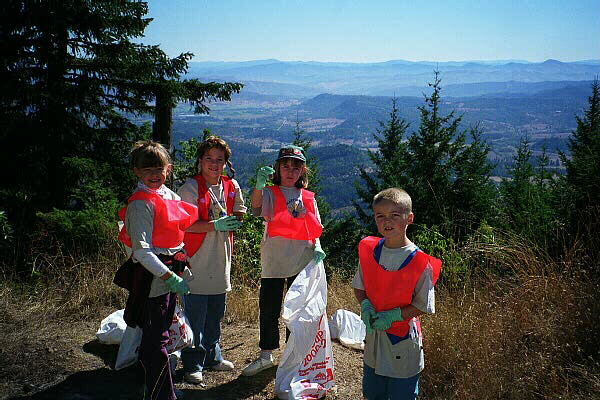
Kohl’s Cares would like to recognize children between the ages of six and 18 for their dedication to volunteer work. Kohl’s Cares is currently accepting nominations for their scholarship program in which students can earn up to $10,000 in scholarship money. According to Kohl’s, “winners will be chosen based on the benefits and outcomes of their volunteer service.”
Students must meet the following eligibility requirements to be considered for the program:
- Student must be between the ages of six and 18 years of age as of Mar. 15, 2015.
- Student must not have graduated from high school yet.
- Student cannot self-nominate. Students must be nominated by someone who is 21 years of age or older. Parents can nominate their children.
- Students must have volunteer experience within the last 12 months.
- Associates of Kohl’s Department Stores, Inc. and/or Associates’ immediate family members (parents, stepparents, children, stepchildren, siblings, step-siblings, or spouse) are not eligible.
The official rules are available at the Kohl’s Cares Scholarship program website.
Nominations can be made online. In addition to being 21 years of age or older, nominators must submit the following information for their nomination to be considered:
- Student information. Nominators will need to submit the student’s full name, age, date of birth, address, phone number, email address, school name and address, and the student’s expected high school graduation month and year. If incorrect information is provided, it may disqualify the student.
- Parent or guardian information. Nominators will need to supply the parent or guardian’s name, phone number, email address.
- Primary volunteer activity information. Nominator will need to share in depth information about the volunteer work the student has performed. The essay should include the type or purpose of the activity, hours invested, any items collected or money raised, number of people affected, and the outcome of the project.
Nominators can nominate multiple students, but must submit a new nomination form for each student. In addition, students can be nominated multiple times as long as different individuals submit nomination forms on their behalf.
The Kohl’s Cares Scholarship Program will separate nominations into two age groups: ages six through 12 and 13 through 18 years of age. The following are the prizes students can win if selected:
- Local winners. Each local winner will receive a $50 Kohl’s gift card. There will be approximately 2,300 local winners selected.
- Regional winners. Each regional winner will receive a $1,000 scholarship that will go towards higher education. 180 regional winners will be selected.
- National winners. Each regional winner will receive a $10,000 scholarship for higher education. In addition, Kohl’s will donate $1,000 to a nonprofit organization on behalf of each national winner. There will be ten national winners.
Scholarships can be used to pay college expenses such as tuition, fees, room and board, books and supplies, transportation and other education-related expenses. The scholarship will be paid in the month of August upon higher education enrollment. The scholarship check will be mailed to the student and will be made payable to the recipient’s institution.
Nominations will be accepted until Mar. 13, 2015. Winners will be notified in May 2015.
See the official rules and learn more about the Kohl’s Cares Scholarship Program at the scholarship website.
Want to stay in the loop? Follow my blog to be notified when new articles are published. You can also follow me on Twitter, Facebook or Pinterest for information on college admissions.
SJSU invites Michelle Obama to speak to first-generation college students
San Jose State University has sent a formal invitation to First Lady Michelle Obama to attend and be the keynote speaker at their inaugural First-Generation Scholarship Luncheon. The event will take place on Feb. 25 in the Student Union Ballroom on the SJSU campus. As an advocate of higher education for all students, including first-generation college students, Michelle Obama is an inspiration to many students at SJSU. According to Amanda Aldama, First Generation College Student Programs coordinator, the White House is currently reviewing the event and the First Lady’s schedule.
In an attempt to get Mrs. Obama’s attention, GENERATE, the First-Generation College Student Program at SJSU, created a video. “We have followed the model of several other campuses who were successful in securing her attendance by making an invitation video,” said Aldama. Their video incorporates SJSU students into a video message Mrs. Obama recorded over a year ago for the “I’m First” project. In the video, Mrs. Obama shares her experience as a first-generation college student, and with every phrase, the SJSU video cuts to a student saying, “I Relate.” Aldama added, “It is our hope that, if this video gets trending, as it did for other campuses, then she may say yes.”
SJSU launched the “I Relate” campaign in 2013 to inform prospective and current students about the achievements of first-generation college students at SJSU. According to the “I Relate” website, more than half of all new Freshman and Transfer students are first-generation college students. GENERATE mission is to “foster connection, belongingness, skills and academic success for the first-generation college students of San Jose State University.” Some the resources GENERATE offers include workshops, campus events, peer mentors, and faculty mentors.
Michelle Obama receives many invitations every year to speak at events such as the SJSU event. Increasing the number of students who attend college has been a goal of the Obama administration since before they took office. An example of Mrs. Obama dedication to education is her “Reach Higher” initiative. The initiative is “to inspire every student in America to take charge of their future by completing their education past high school.” Last month, President Barack Obama proposed free community college education for all students. GENERATE, as well as SJSU, is encouraging everyone to view the “I Reach” invitation video in hopes of making it trend to catch the attention of the White House.
CSU to increase graduation rate to 60 percent by 2025
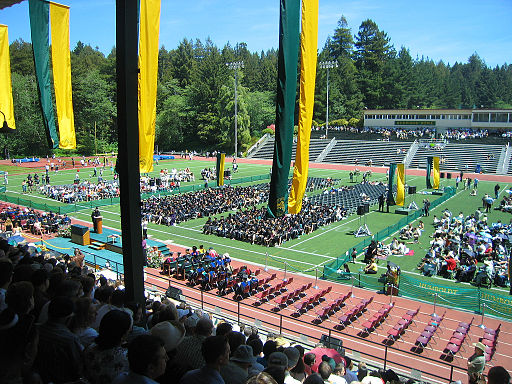
Humboldt State Graduation by Ajay Tallam licensed under CC BY-SA 2.0
Timothy White, the chancellor of the California State University, introduced his Graduation Initiative 2025 at the State of The CSU address last week in Long Beach. The new goal is to increase graduation rates to 60 percent by 2025. The previous Graduation Initiative, which was launched in 2009 and ends this year, was to increase CSU’s graduation rate by eight percent, from 46 percent to 54 percent. Although the numbers will not be finalized until the 2015 commencement, White says The CSU is on track to reach the goal.
The Graduation Initiative 2025 has a total of six goals:
- Increase the six-year graduation rate for first-time freshman to 60 percent.
- Increase the four-year graduation rate for first-time freshman to 24 percent.
- Increase the four-year graduation rate for transfer students to 76 percent.
- Increase the two-year graduation rate for transfer students to 35 percent.
- Close the achievement gap for underrepresented students to seven percent.
- Close the achievement gap for low-income students to five percent.
The Graduation Initiative 2025 outlined many “winning strategies” that the Chancellor’s Office and the 23 CSU campuses will use to reach their goals. Some of the strategies include redesigning courses to incorporate technology, expanding cohort-based learning communities, and expanding programs that foster student engagement such as service learning and study abroad. The CSU also plans to expand the Associate Degree for Transfer program and the number of CourseMatch course offerings. Lastly, the institution wants to build relationships with community colleges and school districts to ensure freshman are prepared for college coursework.
CSU Trustee and California Assembly Speaker Toni G. Atkins (D-San Diego) called the plan ambitious in a written statement. “I think it’s great CSU is committed to achieving these goals without burdening students and their families with additional fee increases.”
“At the end of the day, we all – the state and the university – share common cause in seeing more students succeed at higher rates, so they can go on to design California’s future,” Chancellor White said. According to the chancellor, CSU undergraduate students will earn one million degrees between now and 2025. Under the Graduation Initiative 2025, The CSU estimates 100,000 more degrees will be earned by the people of California. These graduates will join the already three million CSU graduates who make up one in ten employees in California and one in 20 degree holders in the United States.
Scholarships with March 2015 deadlines
The deadlines for the scholarships that were on this list have passed. To see scholarships that are still accepting applications, visit more recent Scholarship Saturday posts.
Buy Me a Coffee

Book Pick of the Month

The link for the book is an affiliate link. You will not pay extra; however, I do receive a small reimbursement if you purchase through the links. Thank you for your support of JLV College Counseling.


 JLV College Counseling
